Accelerating Impact
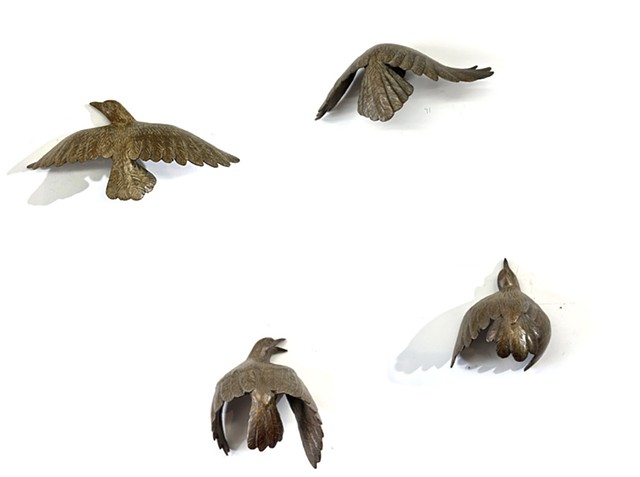
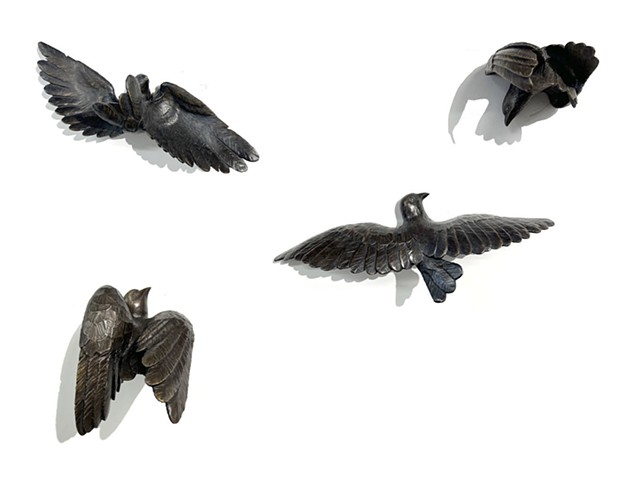
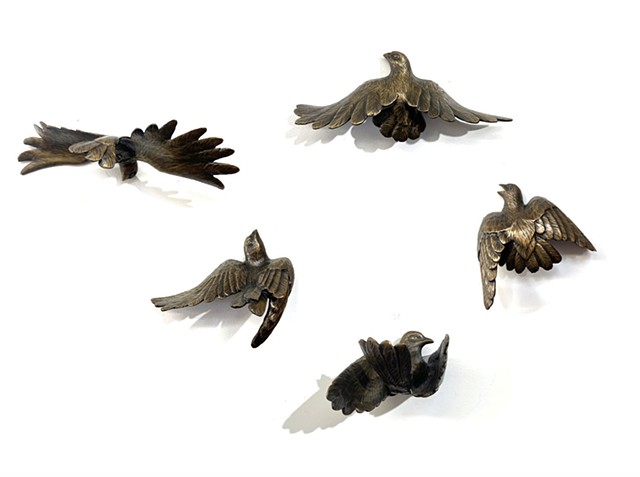
Accelerating Impact, Laurel Roth Hope's first solo show with Catharine Clark Gallery, has its roots in Hope's 2017 Smithsonian Artist Research Fellowship. During her fellowship Hope interviewed and shadowed Smithsonian scientists over a period of 6 weeks, including accompanying Smithsonian Migratory Bird Center ecologists as they netted, documented, banded, and released birds in multiple locations.
Birds are the wild animal most likely to be seen by humans on a daily basis. Even in urban environments they are ubiquitous, their lives overlaying the landscape of our own so seamlessly that they are scarcely noticed. Some have evolved in direct relationship to humanity, their numbers multiplying as we unintentionally create more urban habitat for them as well as ourselves. Others have not. Thirty percent of North American birds have been lost since 1970, which means there are 3 billion less birds on this continent alone than there were 50 years ago. Half of all worldwide bird species are experiencing population declines.
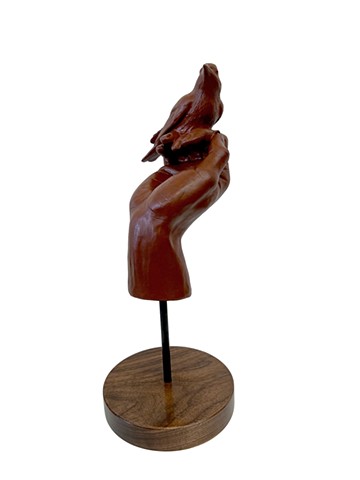
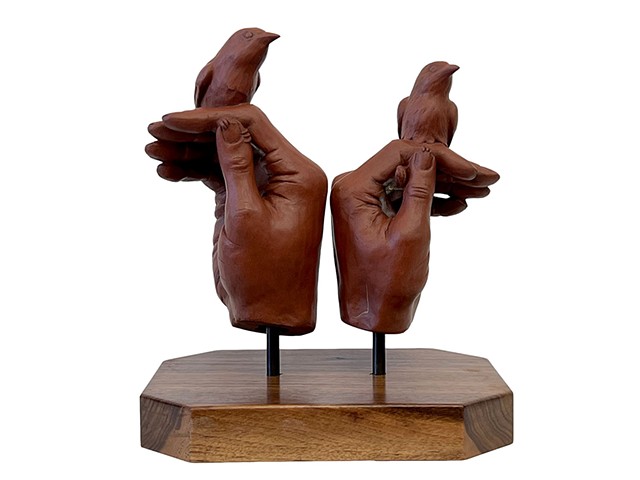
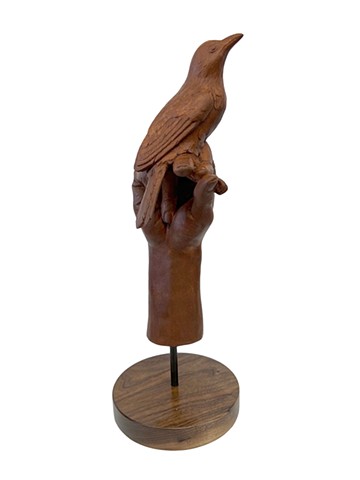
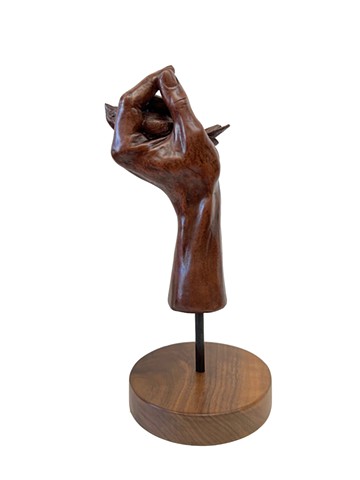
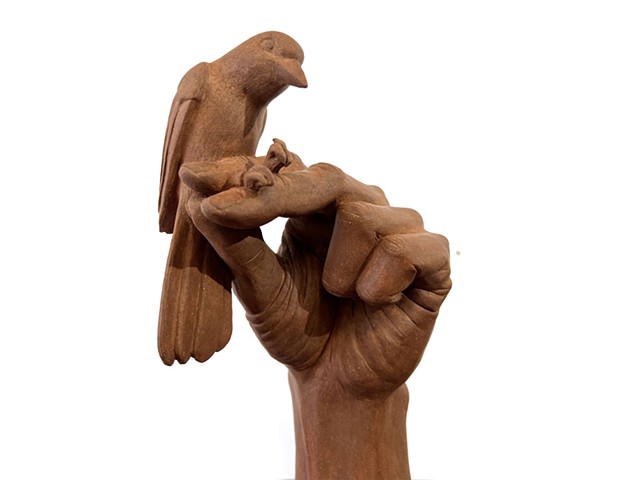
Hope was struck by the moment of connection between the scientists and the individual birds. The birds, captured mid flight in a mist-net before being extricated, bagged, documented, banded, and released, are unaware of their role in science. Their hearts beat wildly against encircling human hands and their bright eyes look for a means of escape. The scientists holding the small live bodies in their hands work quickly and carefully, beholden to a Bird Banders Code of Ethics and highly trained to insure that the value of the data collected on these expeditions outweighs the stress on the individual animals. It's a moment that is choreographed by research and exacting guidelines yet also creates a rare, intimate, and fleeting connection between a human and a wild thing, one life held in the hands of the other.
This moment of connection and the complicated responsibility interwoven with it forms the basis of Hope's newest work, which explores the rapidly accelerating impact our actions have on the world around us.